Skip to content
Research

Mapping the Universe's missing matter

I study astrophysical feedback to uncover the physics governing galaxy formation and, ultimately, mitigate baryonic uncertainties in cosmological analyses of next-generation galaxy surveys such as Rubin, Roman, and Euclid.

Roughly half of the Universe's ordinary matter has never been directly detected. It isn't missing so much as hidden: violent feedback from supernovae and accreting black holes blows gas out of galaxies and spreads it thin across intergalactic space, while carrying magnetic fields with it. Where that gas ends up is the dominant theoretical uncertainty limiting the next generation of cosmological experiments - surveys like Euclid, Rubin, and Roman aim to measure the clustering of matter with exquisite precision to constrain neutrino mass, dark matter, and dark energy, but feedback redistributes baryons in ways that suppress that same clustering and can mimic the very physics these surveys are built to detect. Calibrating feedback is therefore not a side problem for cosmology — it sits directly in the way of it.

Simulations predict a wide range of gas configurations because the physics governing feedback remains poorly constrained, underscoring the need for observational probes that can directly constrain these models of galaxy formation.

A fly-by through three hydrodynamical simulations with different subgrid feedback physics prescriptions, each redistributing baryons differently. This wide range of theoretical predictions for the baryonic content of the Universe motivates the need for observational probes that can directly constrain it.

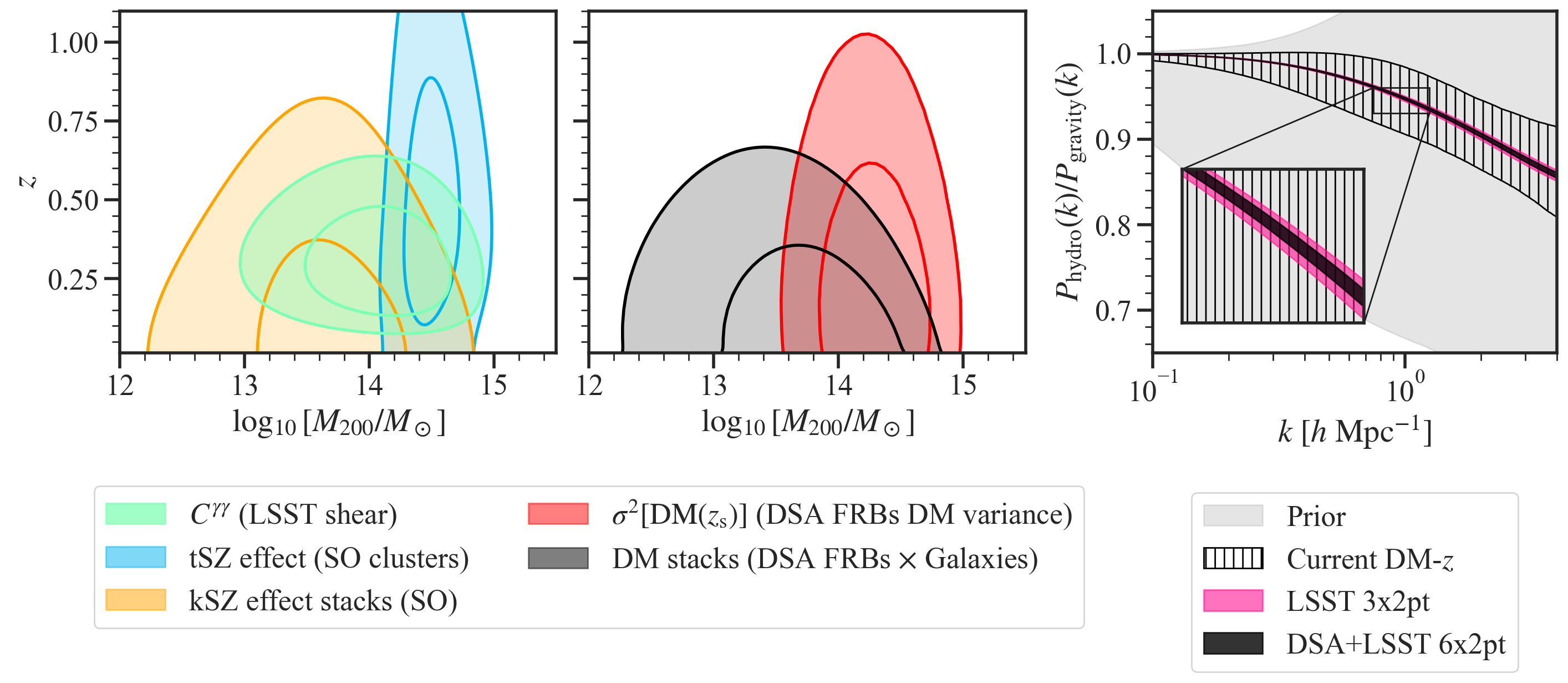
Five independent techniques to extract the fingerprints of diffuse gas have recently matured into precision tools - (1) X-ray emission traces the hot, dense gas; the (2) thermal and (3) kinematic Sunyaev-Zel'dovich effects (tSZ and kSZ, distortions in the Universe's oldest light) trace its temperature and bulk motion; (4) the delay in arrival time (dispersion, DM) of Fast Radio Bursts (FRBs) - the newest and fastest-growing of these five techniques, brief radio flashes slowed by intervening gas - quantifies that gas; and (5) the polarized radio light from galaxies twisted while passing through magnetized gas (Faraday rotation, RM) reveals its magnetization. Each probe is sensitive to a different piece of the puzzle, but combined, they span the full range of cosmic environments (masses and redshifts) needed to extract precise cosmological measurements from Rubin datasets - a dynamic range that no single technique can capture alone.

Different observables probe baryonic matter in different phases and cosmic environments.
My observational tools

Fast Radio Bursts and Faraday rotation

My primary tools are the dispersion measures of FRBs and the Faraday rotation measures of polarized radio sources. An FRB is a millisecond-duration flash of radio light from a distant galaxy; as it travels to Earth, free electrons along the way delay lower frequencies more than higher ones. That delay — the dispersion measure — is a direct, redshift-dependent readout of the column density of ionized gas the signal passed through, including gas far too diffuse to see in any other way. Faraday rotation, the twisting of a radio wave's polarization as it crosses magnetized gas, adds a second, complementary handle: the magnetization of that same gas.

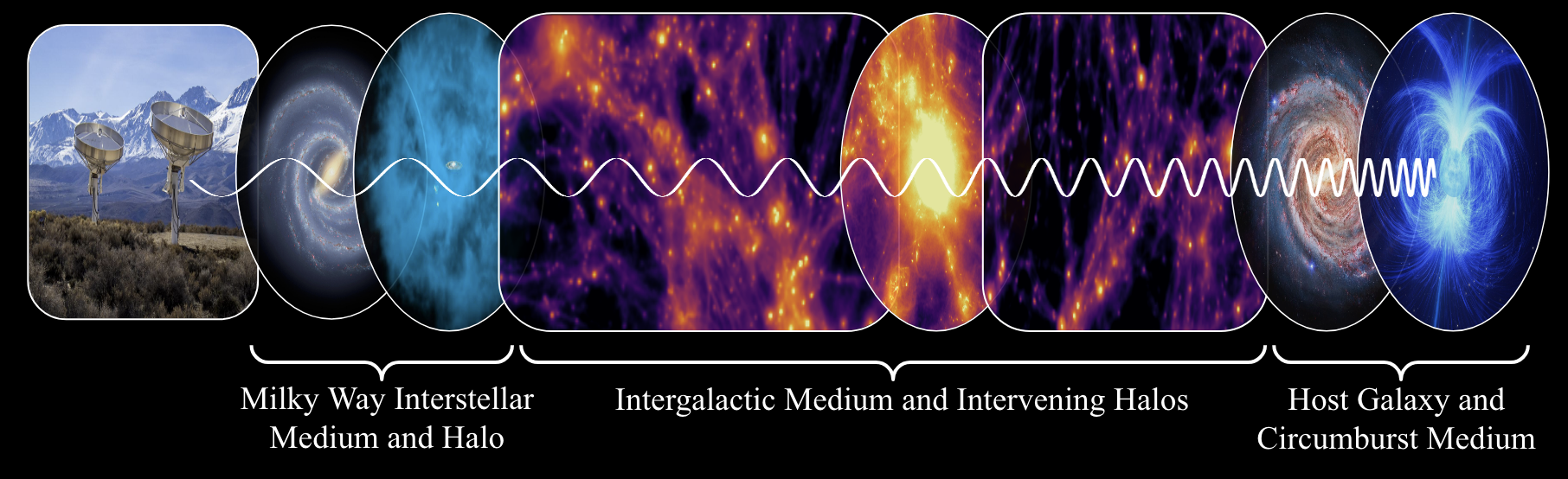
An FRB sightline samples gas in the FRB host galaxy, Milky Way, and the diffuse intergalactic medium and halos in between, which is what makes DM such a sensitive baryon tracer.
As the burst propagates through the cosmic web, its dispersion measure (DM) accumulates in proportion to the integrated electron column density along the sightline. Weaker-feedback scenarios (e.g., IllustrisTNG) produce substantially larger DMs than stronger-feedback scenarios (e.g., SIMBA), allowing the observed sightline-to-sightline DM variance to constrain the strength of astrophysical feedback.
The instrument

The Deep Synoptic Array

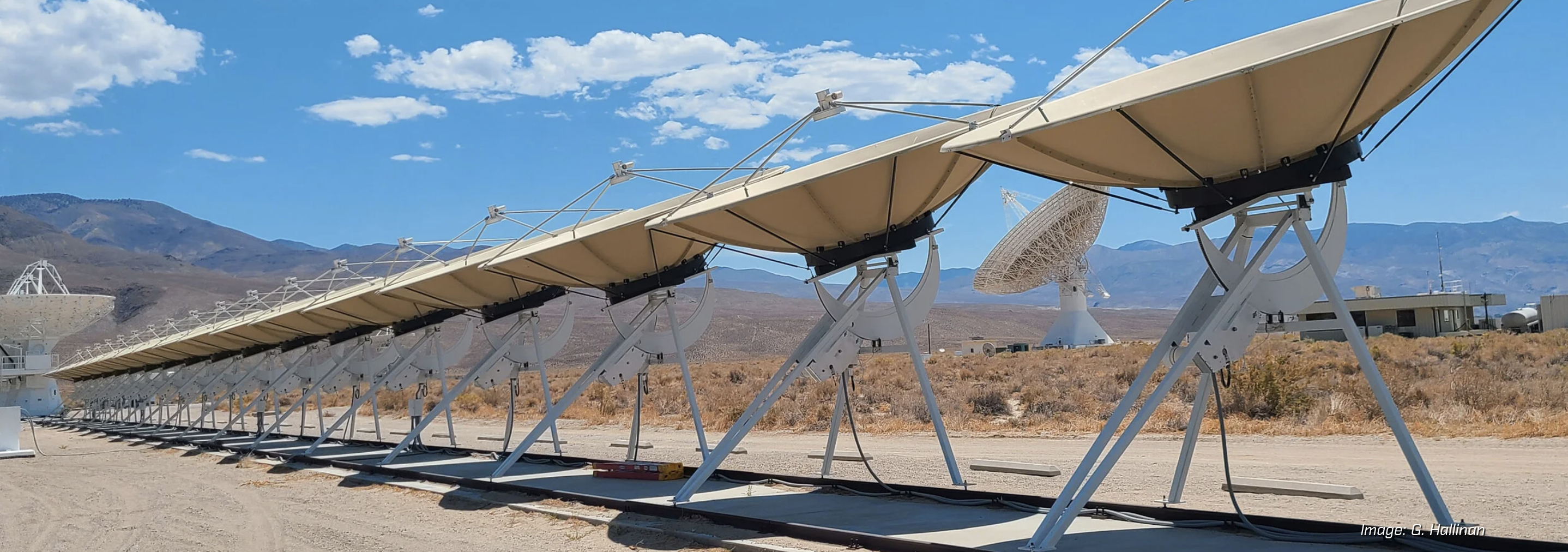
The primary instrument underlying my work is the Deep Synoptic Array (DSA), based at Owens Valley Radio Observatory. DSA-110 has already more than doubled the number of FRBs localized to host galaxies worldwide, and the array is currently scaling up - DSA-2000 is designed to discover more FRBs in a single day than have been found worldwide over the past decade. That leap in sample size is what turns FRB DMs from a promising probe into a precision cosmological tool.

The Deep Synoptic Array at Owens Valley Radio Observatory in Bishop, California.
During my PhD

From theory to measurement

I have developed several components of this program, working toward establishing FRBs as precision probes of baryons - from theoretical predictions and simulations, through the first observational measurements, to forecasts for next-generation FRB surveys.

01

Connecting FRB observables to feedback-induced matter clustering suppression in simulations

We developed a model, calibrated to hydrodynamical simulations, that parameterizes the FRB DM distribution, p(DM|z), as a log-normal whose moments are computed directly from cosmological parameters and the feedback-dependent gas power spectrum. Calibrated against IllustrisTNG, SIMBA, and Astrid, the model captures the suppression of matter power spectrum on small scales induced by astrophysical feedback. With 10⁴ FRBs, we forecast percent-level constraints on this suppression in near future.
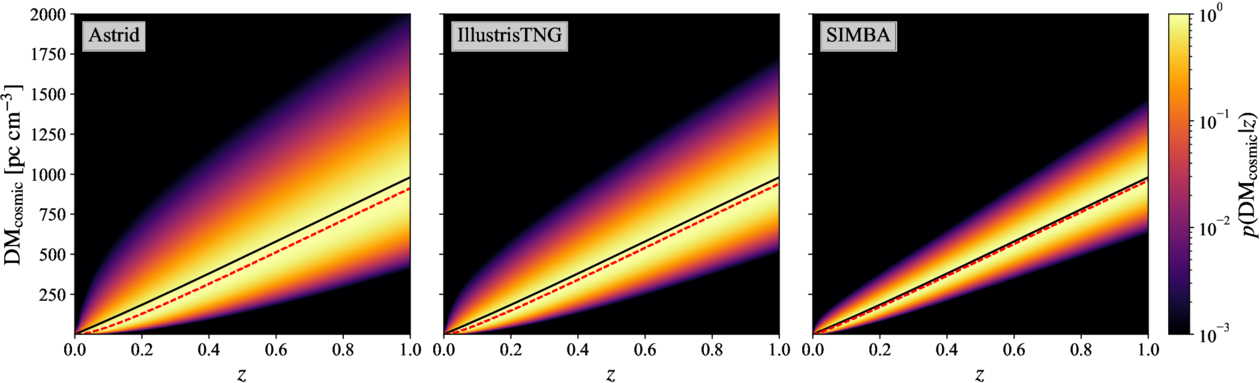
The sightline-to-sightline spread in DM-z relation reduces as the strength of feedback increases in hydrodynamical simulations from left (Astrid) to right (SIMBA).
02

FRB host-galaxy environments

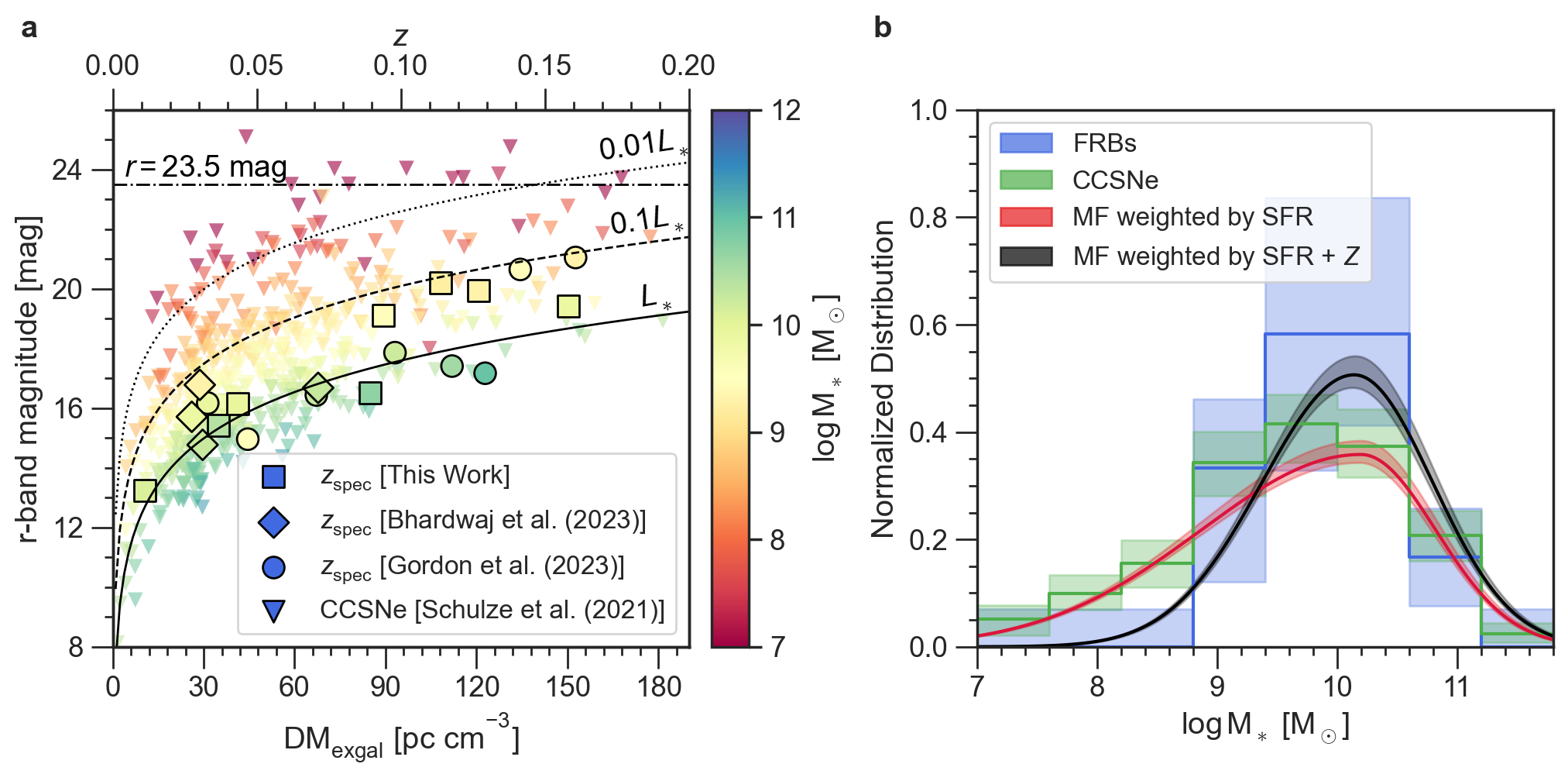
Using stellar population properties of 30 FRB host galaxies, we found a marked deficit of low-mass hosts relative to the overall occurrence of star formation in the Universe - FRBs preferentially occur in massive, star-forming galaxies. This points to magnetars formed in stellar mergers in metal-rich environments, and it matters for cosmology too: these host galaxies do not generally contribute an outsized share of dispersion measure, which is part of why FRBs are useful clean probes for cosmological applications.

Compared with the host-galaxy population of core-collapse supernovae, which closely traces star formation in the Universe, FRBs preferentially occur in more massive star-forming galaxies. Despite this preference, typical FRB hosts do not contribute substantially to the observed DM, making FRB DMs cosmologically powerful.
03
Accepted, Nature Astronomy (2026)

First measurement of matter-power-spectrum suppression with FRBs

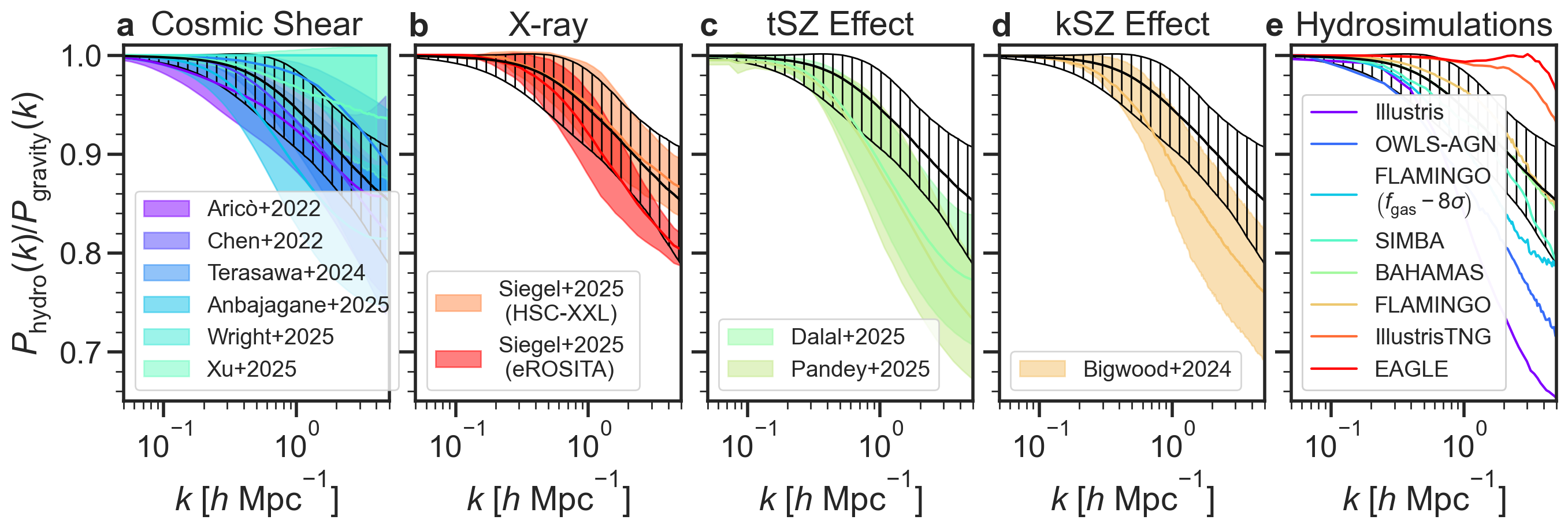
Complex astrophysical feedback redistributes baryons across megaparsec scales, suppressing the clustering of matter that weak-lensing and galaxy surveys use to constrain dark energy, dark matter, and neutrino mass. We conducted the first measurement of that suppression using FRB DMs — an observational milestone that establishes FRBs as a working, independent probe of feedback strength, alongside X-ray, kSZ, and tSZ measurements.

FRB DMs constrain the suppression of the matter power spectrum with precision competitive with state-of-the-art X-ray (eROSITA) and microwave (ACT) experiments.
04-05
Accepted, ApJ (2026)

FRB DM cross-correlations with multiple tracers

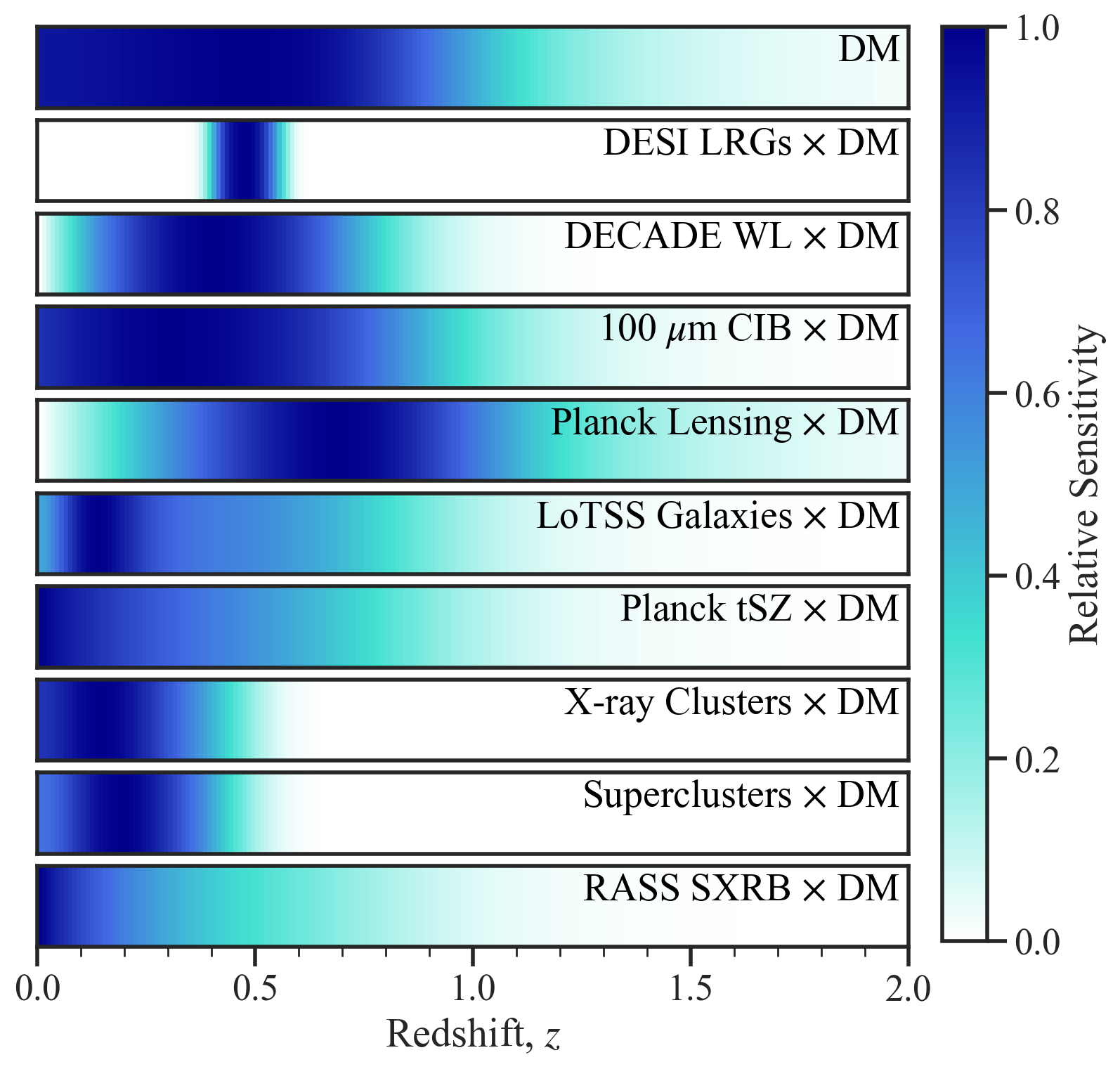
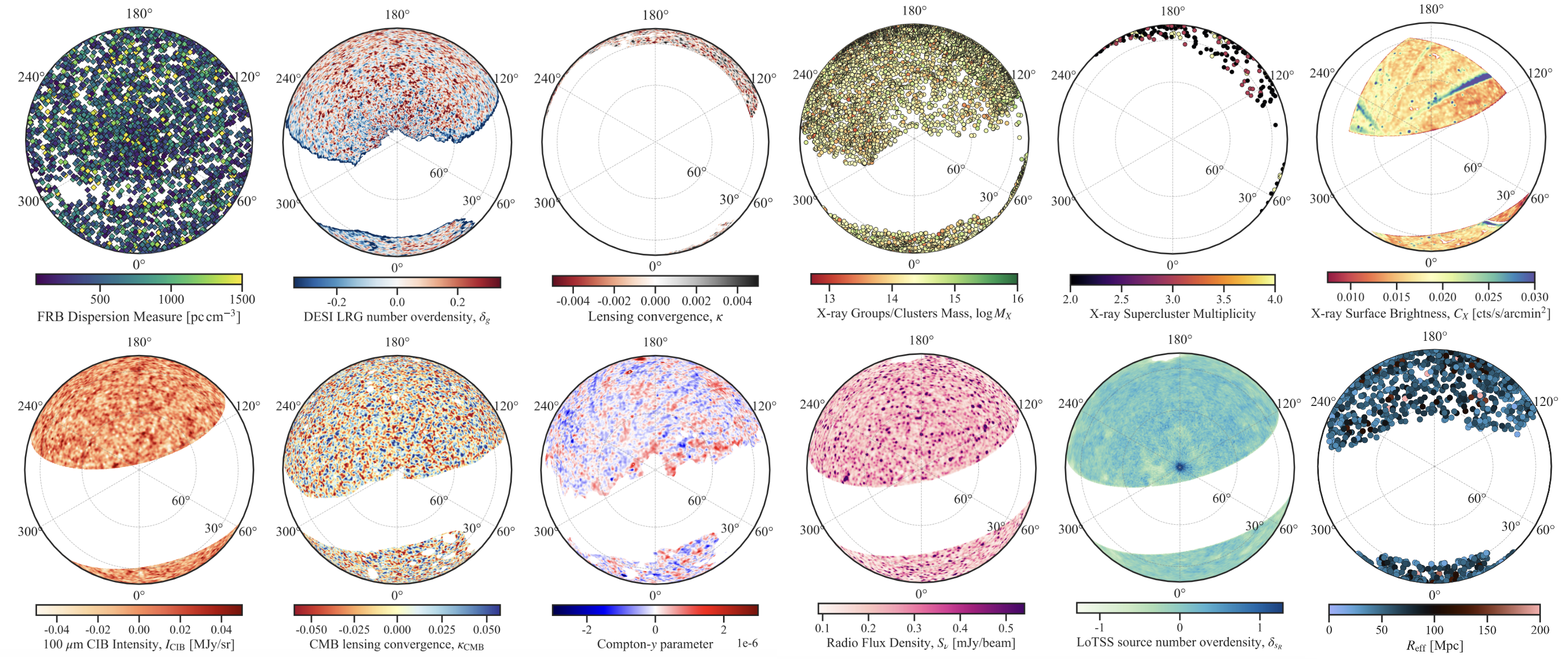
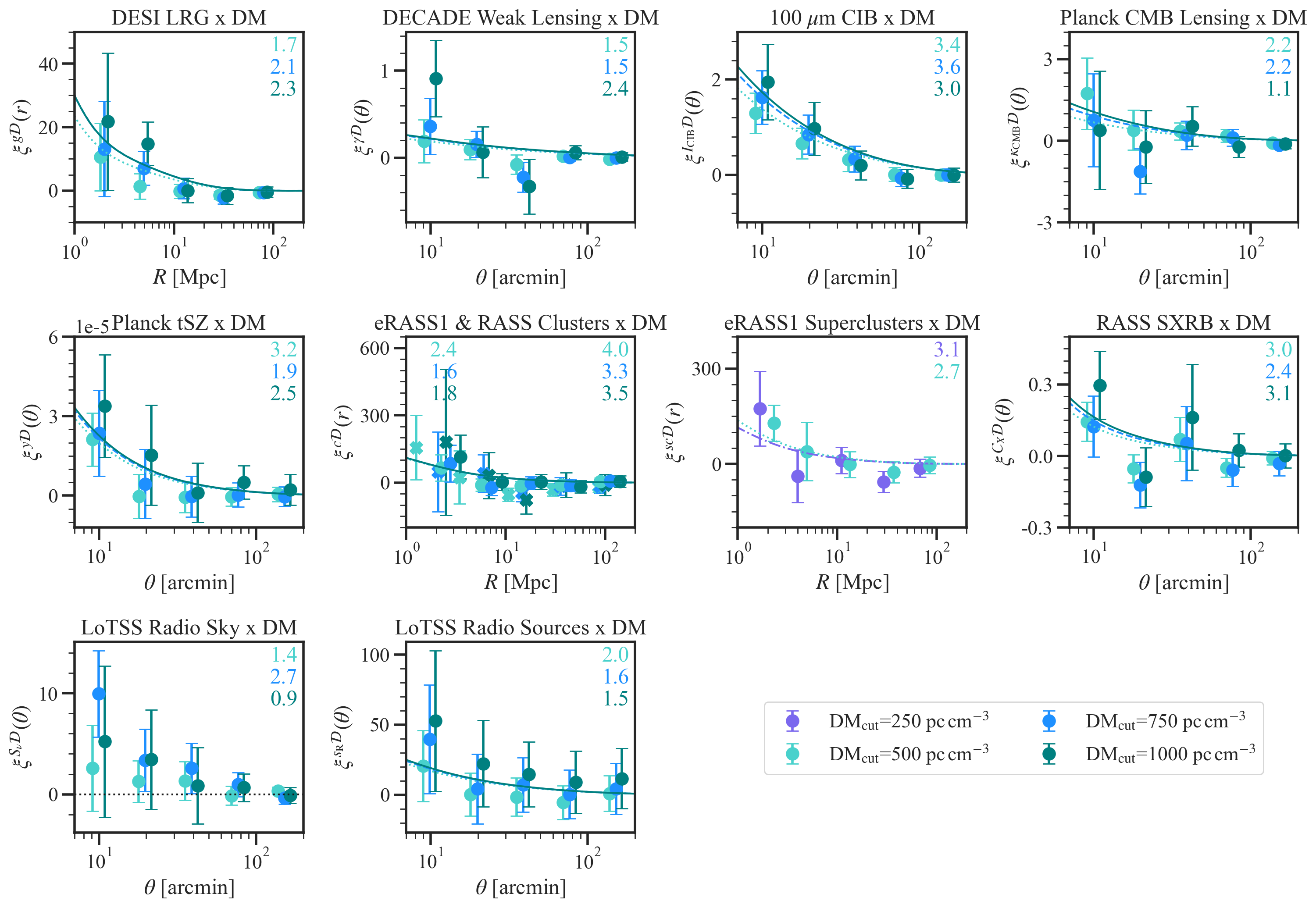
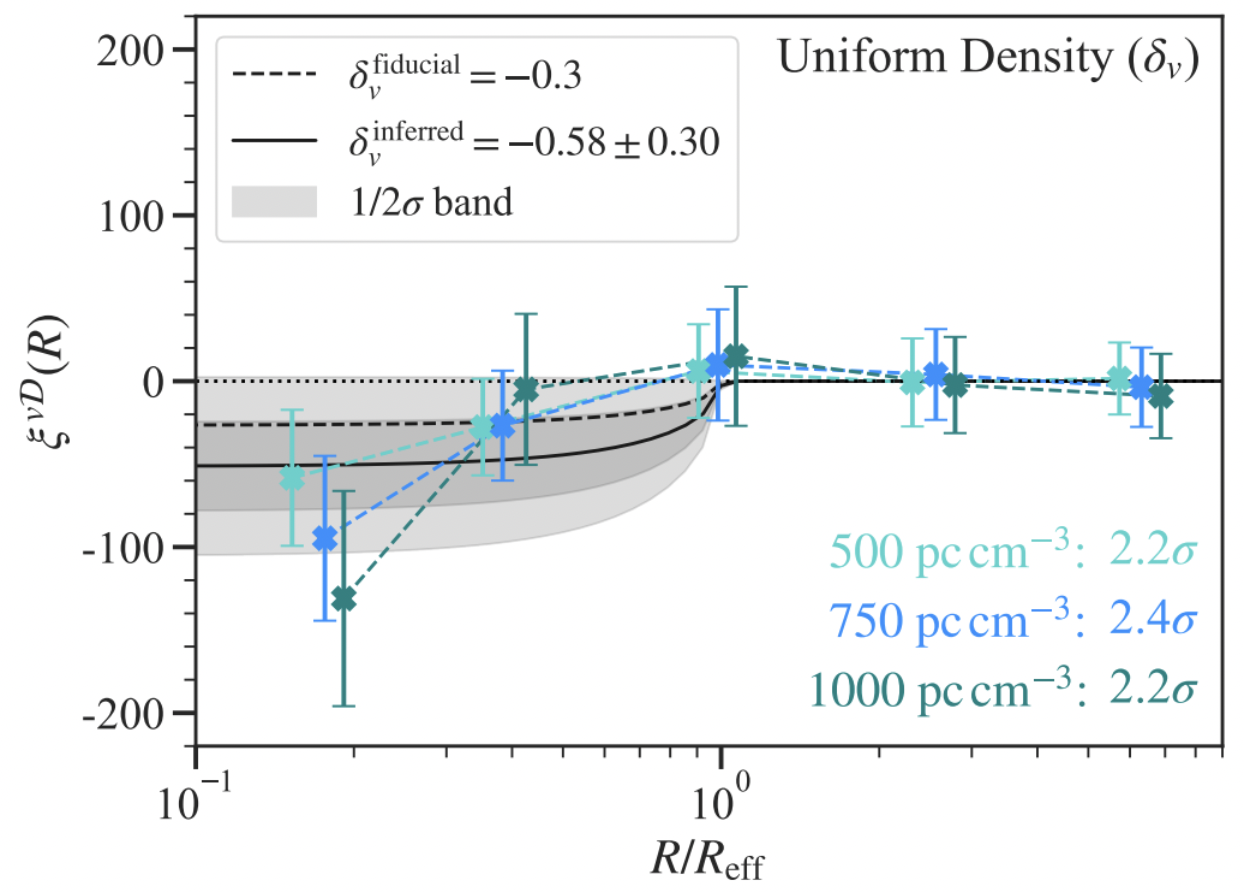
Using 3,455 FRB sources from CHIME/FRB, I measured statistically significant correlations between FRB DMs and ten independent tracers of large-scale structure and baryons — galaxies, weak lensing, the cosmic infrared background, CMB lensing, the thermal SZ effect, X-ray-selected clusters and superclusters, the soft X-ray background, and radio continuum emission. FRB sightlines through overdense environments carry systematically larger DMs, establishing FRB DM cross-correlation as a genuine cosmological tool. A companion analysis pushes this to the opposite extreme, stacking the same FRB sample on SDSS BOSS cosmic voids and detecting a DM deficit toward void centers, the first direct observational evidence for a baryon deficit in the emptiest regions of the cosmic web.

The cross-correlations of FRB DMs with various probes are sensitive to feedback out to redshift of ~1.5.
The wide variety of probes used in our pilot study.
First measurements of statistical FRB DM cross-correlations with tracers of large-scale structure and baryons.
First measurement of baryon deficit in the interiors of cosmic voids.
06

Impact of selection effects on FRB one-point statistics

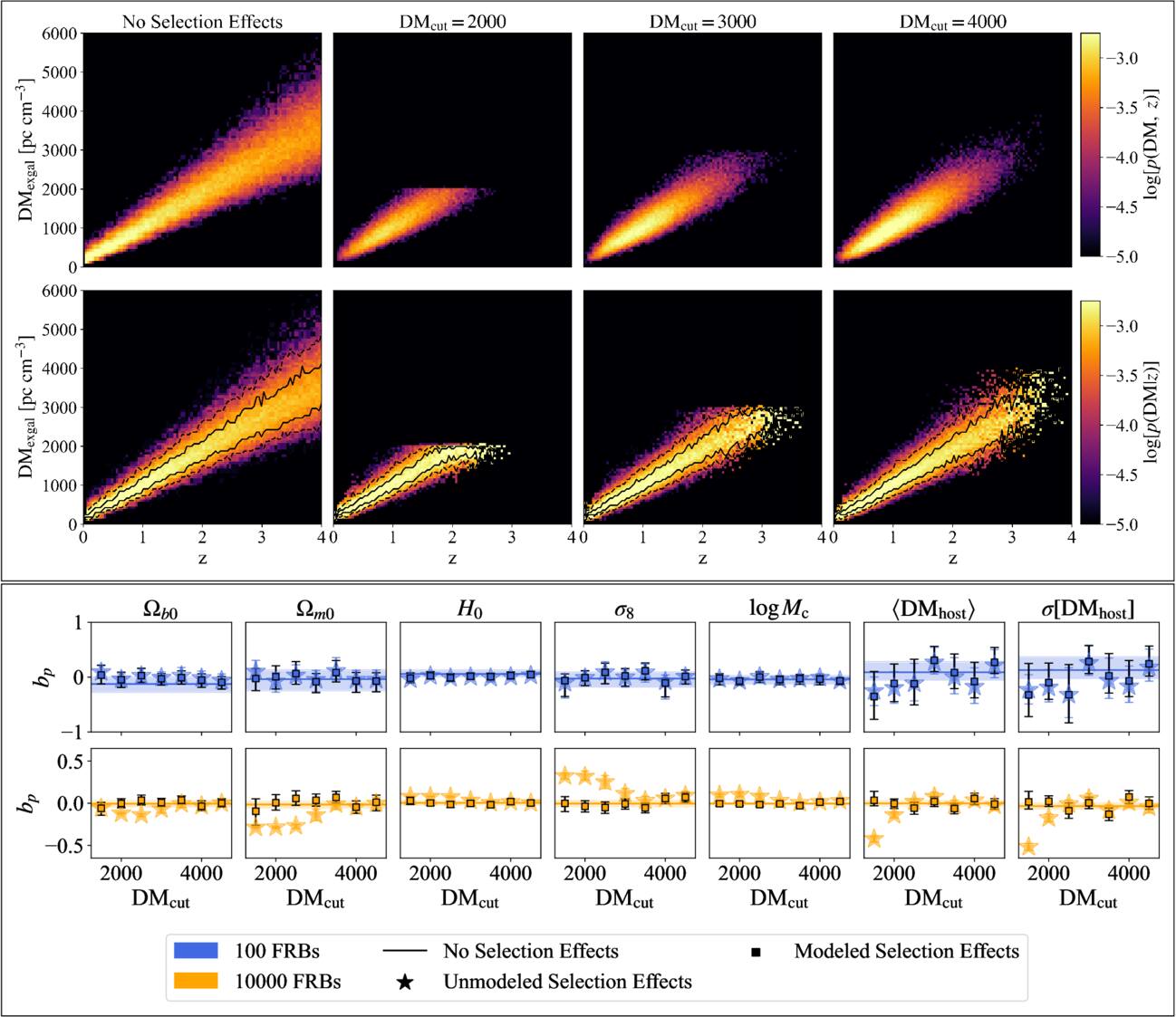
Real FRB surveys don't observe a clean, unbiased sample: instrument sensitivity, DM-dependent search efficiency, and the redshift evolution of the FRB population all shape which bursts get discovered. I built forward-modeled mock surveys to quantify how much these selection effects bias cosmological and feedback inference. For current sample sizes (~10²) the bias is negligible, but for next-generation samples (~10⁴) it can be significant unless selection effects are modeled explicitly - a result that directly informs how datasets from DSA-scale surveys should be analyzed.

While one-point statistics from current FRB samples are largely unbiased, instrumental and population-selection effects will become increasingly important-and potentially introduce significant biases-in analyses of future datasets.
07

Forecasts for next-generation DSA-like FRB samples

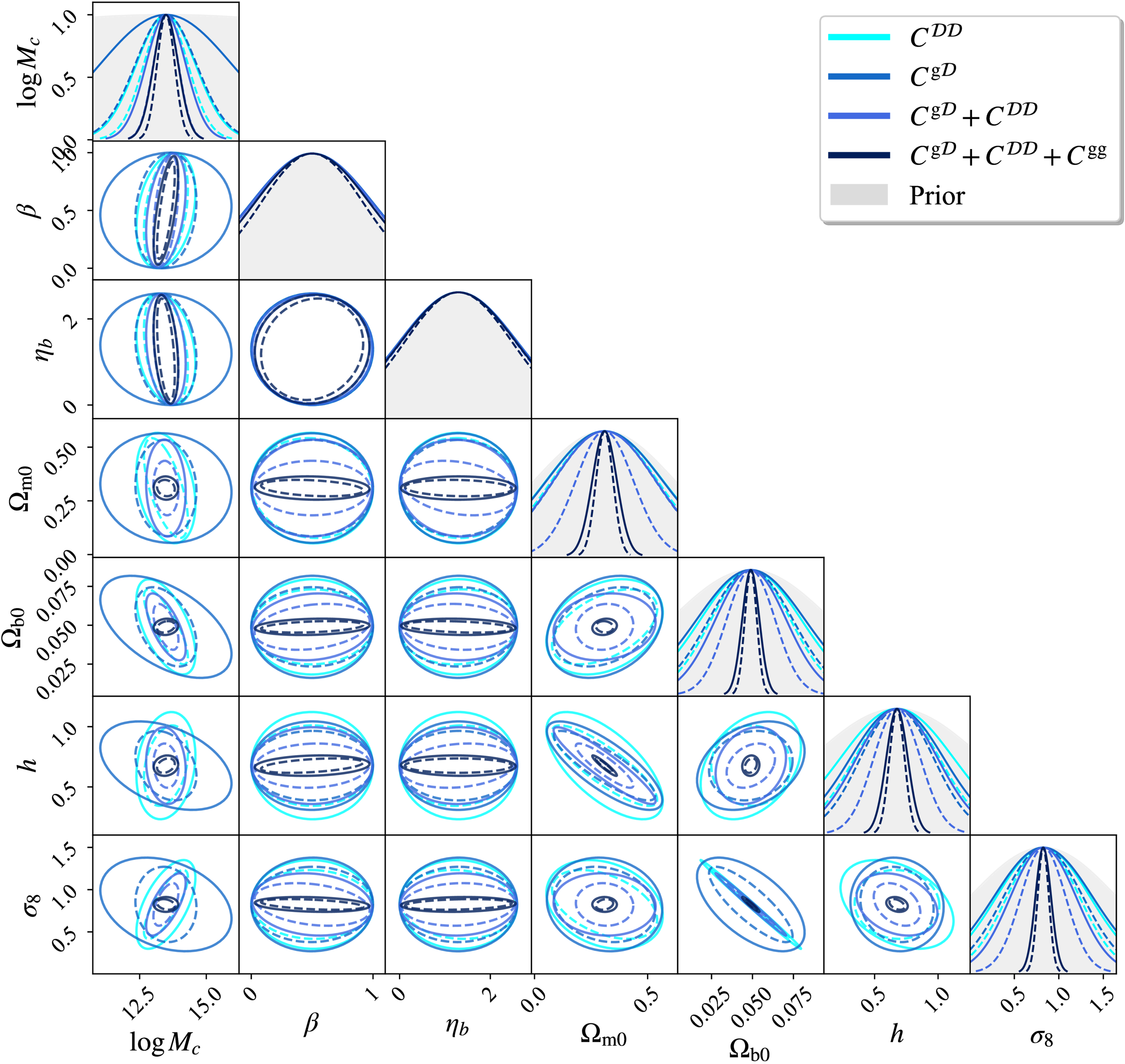
Looking ahead to DSA-2000-scale samples, we derived the statistical formalism, covariance matrices, and Fisher forecasts for a 3×2-point correlation statistic combining FRB DMs with galaxy positions. For 10⁴-10⁵ FRBs across a third of the sky, this cross-correlation stays signal-dominated even with only arcminute-level FRB localization - meaning the statistic is within reach of the very large, less precisely localized samples the next generation of surveys will deliver, positioning it as a practical route to joint feedback-and-cosmology constraints.

Large FRB samples from DSA-2000 will help break the degeneracy between astrophysical feedback and cosmology in analyses of future galaxy surveys such as Roman, Rubin, and Euclid.
Where is this going?

What do these measurements enable next?

Taken together, this progression - from a theoretical model linking FRB dispersion to feedback, to the first measurements of feedback's imprint on matter clustering and the cosmic web, to a quantified understanding of survey selection effects and a forecasting framework for cross-correlation statistics - is the observational foundation for a much larger goal: turning FRBs, alongside kSZ, tSZ, X-ray, and Faraday rotation measurements, into an empirically calibrated feedback model. As DSA-2000 and other next-generation radio surveys deliver orders-of-magnitude larger FRB samples, on a timescale tracking Rubin's first year of observations, that model can remove one of the largest obstacles standing between next-generation cosmological surveys and the physics they're built to reveal!

My Publication Record →